
My Life Story-Part-8
Clinical Resilience Became The Foundation Of Rebuilding My Health, Vitality, And Strength After Years Of Hardship And Survival.
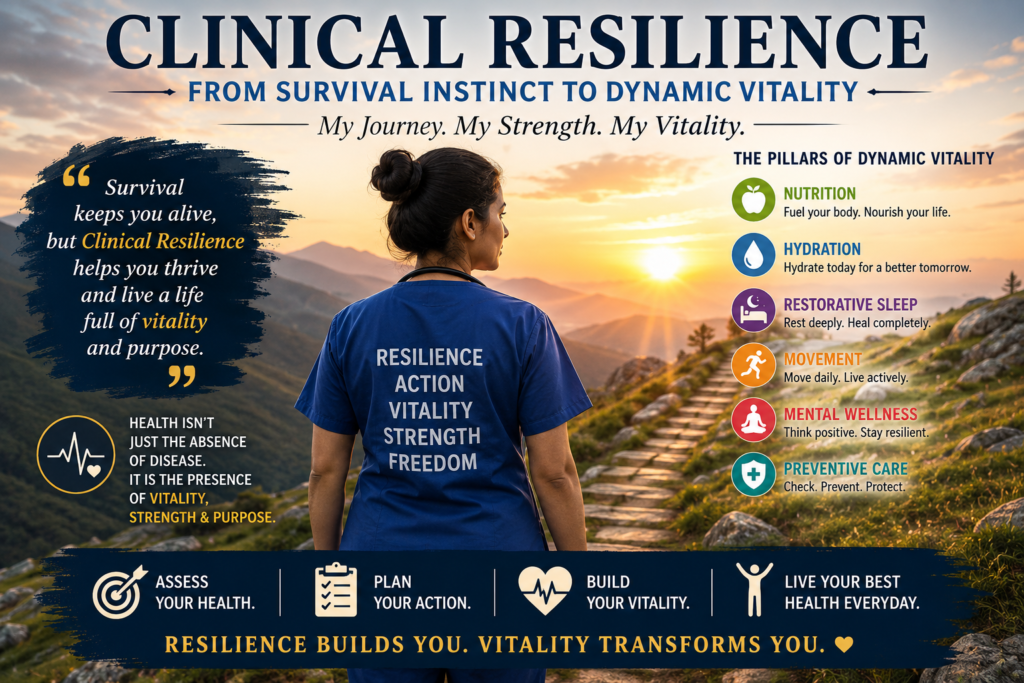
Defining Clinical Resilience And Vitality
To understand how psychological confinement shaped my resilience and personal growth, you can read my previous article, Shattering the Silken Chains: The Psychological Labyrinth of Confinement and Reclaiming Agency. Clinical Resilience helped me rebuild my health.
In the antecedent publications of my “Simple Health Journey,” I recounted the formidable challenges of isolation, destitution, and psychological confinement.
While those experiences forged an indomitable Intrinsic Resilience, they also underscored a critical deficiency in my family’s overall wellness: a lack of dynamic Vitality.
As a trained nursing professional, I understood that “health” is not simply the medical absence of disease.
Dynamic health is characterized by vibrant energy, efficient physiological functioning, and robust psychological resilience.
For trusted information about health, wellness, and disease prevention, readers can visit the World Health Organization (WHO).
This is what I define as Vitality. Clinical Resilience strengthened my vitality.
Vitality is not an abstract concept; it is a measurable, tangible indicator of dynamic health.
In a clinical setting, we monitor a patient’s vital signs—blood pressure, heart rate, temperature—because these indicators provide critical data on their physiological state.
However, these signs only tell a partial story. True Functional Vitality is about the quality of life, not just the mechanics of survival.
It is the difference between a patient whose vitals are stable but who is listless and fatigued, versus a patient who is actively thriving, engaged, and full of life.
When my husband, my child, and I were living in that single, empty room, our vitals may have been stable, but our Vitality was non-existent.
We were existing in a state of chronic, sustained fatigue, our physiological reserves depleted by poverty and malnutrition. Clinical Resilience improved my recovery.
The sustained stress of functional neglect had left us functionally compromised.
It was in this stark reality that I realized our next chapter could not just be about financial recovery; it had to be about a comprehensive, clinical strategy to rebuild our Dynamic Vitality. Clinical Resilience taught me discipline.
The Poverty Deficit : When Survival Ignores Vitality
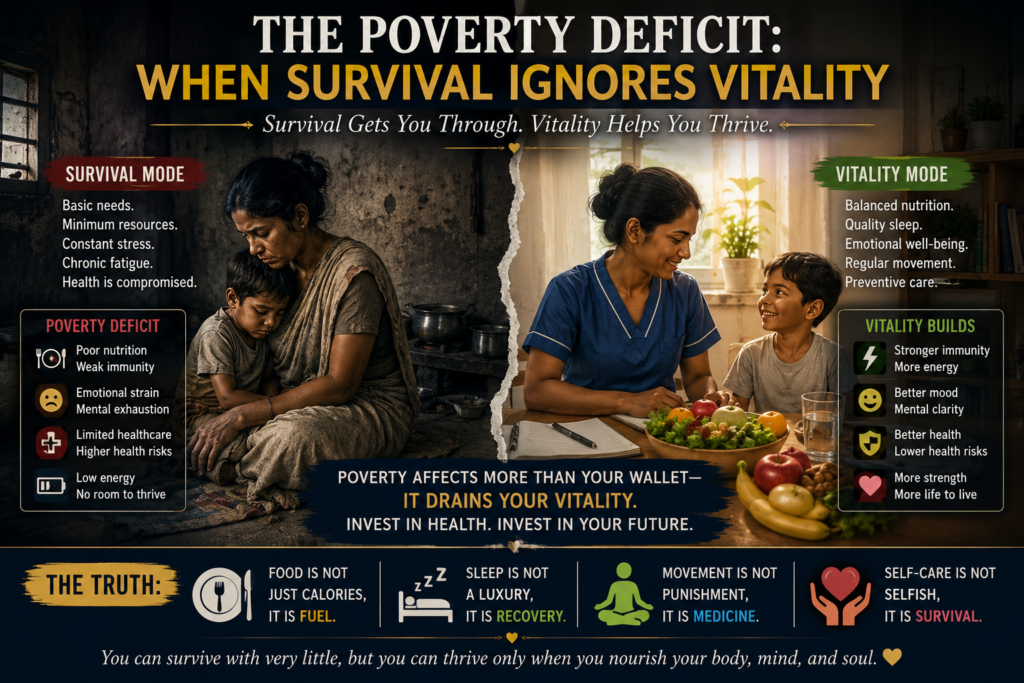
During our years in destitution, our primary objective was physiological survival. We focused intensely on basic nutrition and shelter, a dynamic that often resulted in a functional neglect of our own Holistic Vitality. Clinical Resilience supported long-term wellness.
The clinical and social isolation meant we lacked access to comprehensive medical diagnostics, preventive healthcare, and the specific nutritional interventions that facilitate true vitality.
Our “health” was a fragile, compromised state, vulnerable to the slightest medical or social destabilization.
We were living in a poverty deficit, a state where our dynamic energy reserves were chronically depleted.
My own experience with starvation during pregnancy, while physically enduring, was a devastating blow to my Maternal Vitality. Clinical Resilience encouraged healthy habits.
I knew the clinical metrics for healthy maternal function, yet I was forced to confront my own physiological deterioration.
This experience, while deeply personal, provides critical insight for my work as a health coach.
It demonstrates that sustained poverty, even when managed with a high degree of intrinsic resilience, systematically erodes dynamic vitality, increasing susceptibility to chronic illness and reducing functional capacity.
We learned that poverty is not just a financial state; it is a profound risk factor for clinical deterioration. Clinical Resilience increased my strength.
Our compromised functional health during this period meant we were not just economically constrained, but physiologically constrained as well.
The constant state of “doing more with less” meant that our available dynamic energy was prioritized for basic physiological maintenance, leaving zero capacity for dynamic thriving. Clinical Resilience improved my confidence.
The Clinical Shift : Building Clinical Resilience Through Action
Our triumphant return to financial stability through my nursing career provided the necessary capital, but it was my clinical knowledge that provided the necessary strategy to rebuild our family’s health.
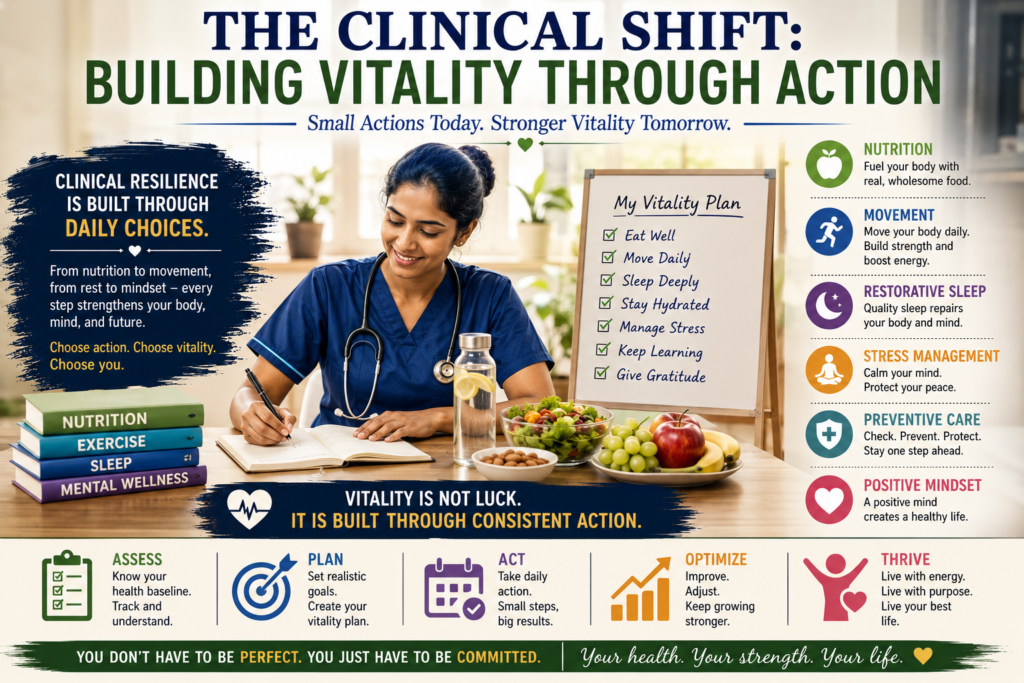
I moved beyond passive recovery to an active, structured protocol: the Vitality Index.
This was not merely about medical check-ups; it was a methodical approach to optimizing all determinants of health.
Clinical Resilience became part of my daily life.
We began with detailed clinical diagnostics, addressing nutritional deficiencies with targeted, medical-grade supplementation and a precise nutritional therapy plan.
As a nurse who had managed complex patient interventions on the medical ward, I implemented these same principles within our home.
We systematicically optimized our hydration protocols, prioritized dynamic sleep hygiene, and integrated functional movement therapies to restore musculoskeletal vitality.
Clinical Resilience helped me overcome hardship.
This was a shift from reactive crisis management to proactive vitality optimization. We established a rigorous schedule, prioritizing consistent wellness check-ins, medical screenings, and strategic health educational sessions for our entire family.
This structured clinical approach was a stark contrast to the functional neglect of our past. Every medical decision was a conscious step toward increasing our collective Vitality Index—our quantitative and qualitative measurement of dynamic health.
The goal was to build our metabolic reserves and enhance our physiological resilience, ensuring we were not just living but clinically thriving. Clinical Resilience supported physical recovery.
Conclusion : Achieving Holistic Vitality and Strength
Our victory was not merely in leaving poverty behind; it was in reclaiming dynamic, clinical vitality.
Rebuilding our family’s health from a compromised state required not just intrinsic resilience but robust, targeted clinical intervention.
This period proved that true functional freedom is predicated on having the physiological capacity to actively engage with life.
Clinical Resilience improved emotional well-being.
Today, as a Simple Health Coach, I guide clients in assessing and optimizing their own Vitality Index.
We move beyond the simple metrics of physical check-ups, using advanced diagnostic tools and sophisticated lifestyle optimization strategies to build metabolic reserves and enhance physiological functioning.
Clinical Resilience inspired personal growth.
Robust, dynamic vitality is not a privilege; it is a fundamental pillar of functional health.
My journey from a state of compromised vitality in poverty to vibrant, robust health in professional freedom demonstrates the transformative power of a comprehensive, clinically-led wellness strategy.
If you are existing in a state of chronic fatigue, functional neglect, or compromised health, know this: Survival is not your final destination. You possess the capacity to optimize your vitality and build dynamic resilience. Use my journey as your blueprint.
Invest in your health, partner with qualified clinical expertise, and demand not just the absence of medical pathology, but the robust, vibrant, dynamic vitality you need to live your life to its fullest potential.
By Raji
“Resilience keeps you moving forward, but vitality gives you the strength to enjoy the journey.“